- Startup cost: roughly $7,000 to $25,000, mostly equipment. Renting a grinder for your first jobs keeps it low.
- What pros charge: about $5 to $9 per sq ft for residential garages is a common range. A 2-car garage often lands around $2,000 to $3,600.
- Licensing: in Florida, flooring isn't state-licensed and cities and counties can't require a license for it. Other states vary.
- The make-or-break skill: surface prep and moisture testing. That's where most failed floors come from.
- Price every job from your real numbers. Our free epoxy calculator gives you a quote price and price per sq ft in two minutes.
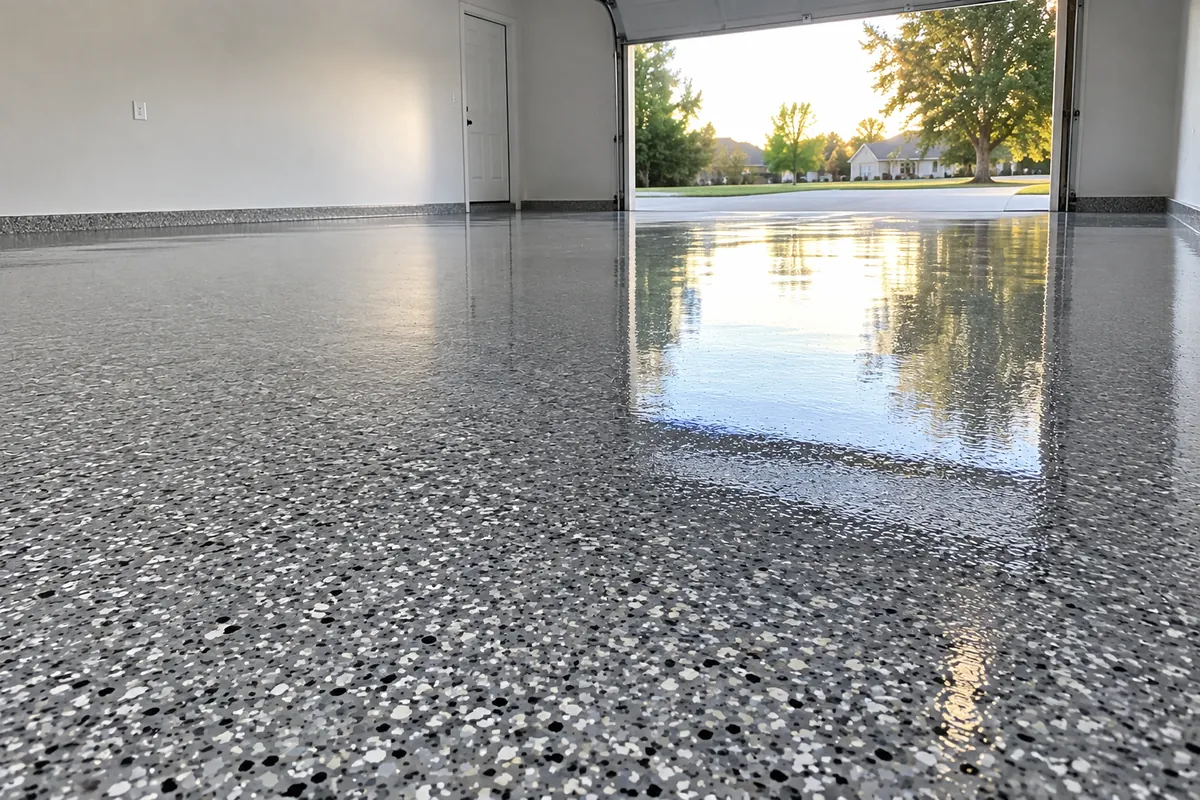
Is epoxy flooring a good business?
For a lot of people, yes. Garage floors are short jobs, usually one to three days. The results are visual, so before and after photos do your selling for you. You can start on weekends while you keep your day job. The margins can be good, as long as you price from your real costs.
The downside is that the work is less forgiving than it looks. Most epoxy failures come from prep and moisture, not the product. A floor that peels in year one costs you the redo, the materials, and your reputation. If you're willing to learn prep properly, this is one of the better trades to start small in.
| Pros | Cons |
|---|---|
| Short jobs, fast cash flow | Prep is hard, physical work |
| Very visual, easy to market with photos | Moisture and bad slabs cause callbacks |
| Can start part time | Weather, humidity and temperature limit your schedule |
| Low licensing barriers in some states, like Florida | Lots of low-ball competitors and DIY kits |
Learn the trade before you sell it
Don't learn on a customer's floor. The fastest ways to get good:
- Work for an installer for a few months, even part time. You'll learn prep, timing and how a crew moves.
- Take manufacturer or distributor training. Many coating suppliers run hands-on classes, often for a few hundred dollars.
- Do your own garage first, then a friend's or family member's at cost. Photograph everything.
- Read the product data sheets for every product you use. Mix ratios, pot life, temperature range and recoat windows are all in there.
Startup costs
Here's a realistic range for getting started. Industry estimates put most new epoxy businesses somewhere between $7,000 and $25,000 total.
| Item | Typical range |
|---|---|
| Equipment and tools | $3,000 – $10,000 |
| Starting materials (resin, flakes, primer, topcoat) | $1,000 – $3,000 |
| Business setup and licensing fees | $500 – $1,500 |
| Marketing and branding | $500 – $2,000 |
| Insurance (per year) | $1,000 – $5,000+ |
| Training (optional) | $300 – $1,000 |
Ranges from industry startup estimates. Your costs depend on your area, your vehicle, and whether you rent or buy equipment.
The biggest lever is the grinder. Renting one plus a dust extractor for your first several jobs keeps you near the low end. Once you're booking steady work, buying your own pays for itself.
The equipment you actually need
You don't need everything on day one. This is the core kit:
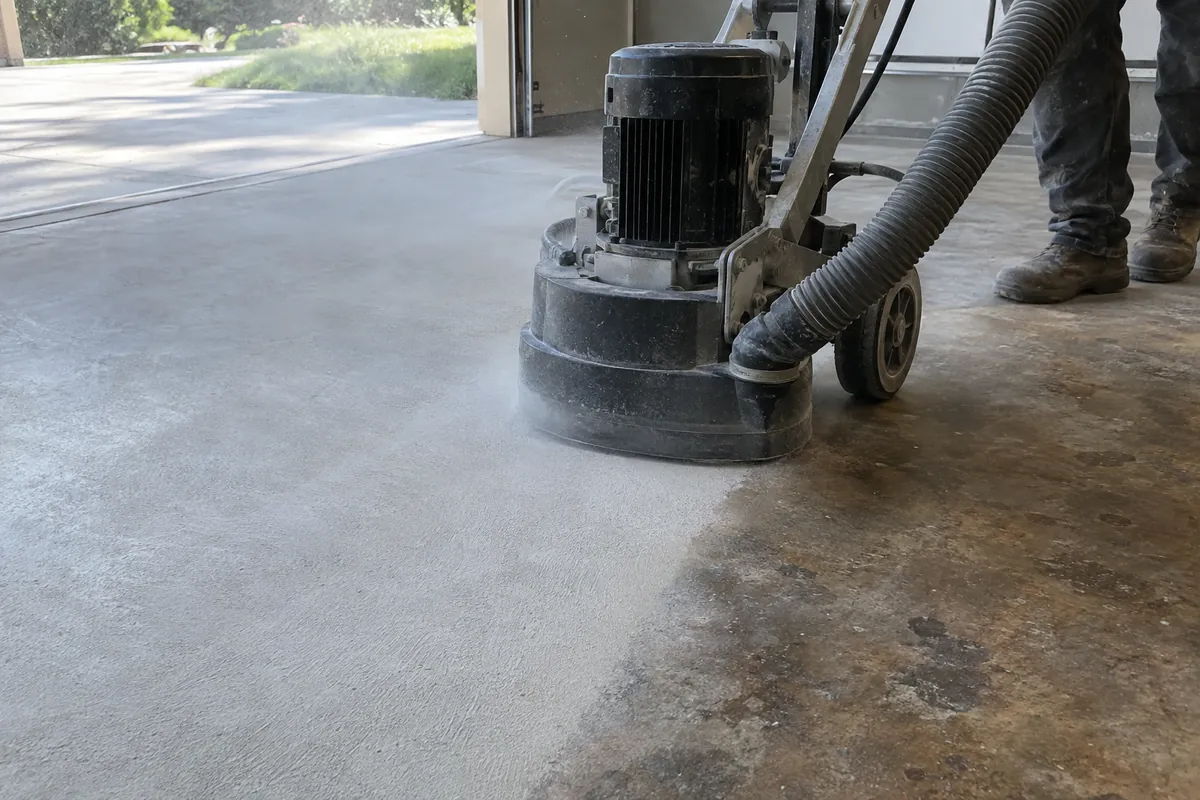
- Floor grinder with diamond tooling. This is how you open up the concrete so the coating can bond. Rent at first.
- Dust extractor / HEPA vacuum sized for your grinder. Concrete dust contains silica, so dust control matters for your health and your customer's home.
- Hand grinder for edges and corners.
- Crack and joint repair material and a putty knife.
- Mixing drill and paddles, plus buckets and a timer. Once it's mixed, the clock is running.
- Squeegees, rollers and frames, and spike shoes so you can walk the wet floor.
- Moisture testing: at minimum, plastic sheet tests. A meter or professional test is better on questionable slabs.
- PPE: respirator, gloves, eye protection, knee pads.
Licensing, insurance and setting up the business
Set up the business
- Form an LLC with your state (in Florida, that's Sunbiz) and get a free EIN from the IRS.
- Open a separate business bank account.
- Get your local business tax receipt from your city and county.
Licensing
This depends on your state. In Florida, flooring isn't licensed at the state level, and Florida law bars cities and counties from requiring a local license for flooring (F.S. 489.117(4)(a)). If a job turns into structural concrete or slab repair, that part may need a licensed contractor. Read our Florida contractor license guide for the full picture. In other states, check your state licensing board before you sell your first job.
Insurance
Get general liability before your first paid job. If you hire anyone, look into workers' comp right away, since the rules vary by state and get strict for construction. Talk to an agent who writes policies for contractors.
Contracts and deposits
Never start a job on a handshake. Your contract should spell out the scope, the system and colors, the payment schedule, and what happens with moisture issues or slab damage you find after grinding. Our Contractor Agreement template covers deposits, change orders and stopping work for late payment.
Rules vary by state, county and city and change over time. Confirm licensing and insurance requirements with your state board and a licensed professional.
Pick your systems
Start with one or two systems you know well, rather than offering everything.
- Flake floors are the bread and butter of residential garages. They hide imperfections and look great.
- Solid color floors are common in shops and commercial spaces.
- Metallic floors are high-end and harder to install. Save them until you're confident.
The other big choice is epoxy vs. polyaspartic. Polyaspartic cures fast and handles sunlight well, but it sets up fast, so you work quickly. Epoxy gives you more working time and usually costs less, but it can yellow in direct sun. Many pros use both: an epoxy base coat, flakes, then a polyaspartic top coat.
How to price epoxy jobs
New epoxy contractors underprice more than anything else. The fix is simple: build every quote from your real costs.
Quote = (materials + labor + equipment and other costs + overhead) × your markup
A real example
Here's a 2-car garage run through our free calculator with example prices:
| Floor area (plus a step) | 496 sq ft |
| Kits (base / flake / topcoat) | 2 / 2 / 3 |
| Materials | $1,622 |
| Labor (2 people × 14 hours) | $840 |
| Equipment, travel, other | $310 |
| Quote price (10% overhead, 35% markup) | $4,116 |
| Price per sq ft | $8.30 |
That lands inside the common $5 to $9 per sq ft range for residential garages, and it's based on real costs instead of a guess.
Markup isn't margin
A 30% markup on cost is only about a 23% margin. If you think you're keeping 30 cents on the dollar, you're not. Always check the margin before you send the quote.
Set a minimum job price
A one-car garage still takes a full setup, travel and cleanup. Set a minimum so small jobs still pay.
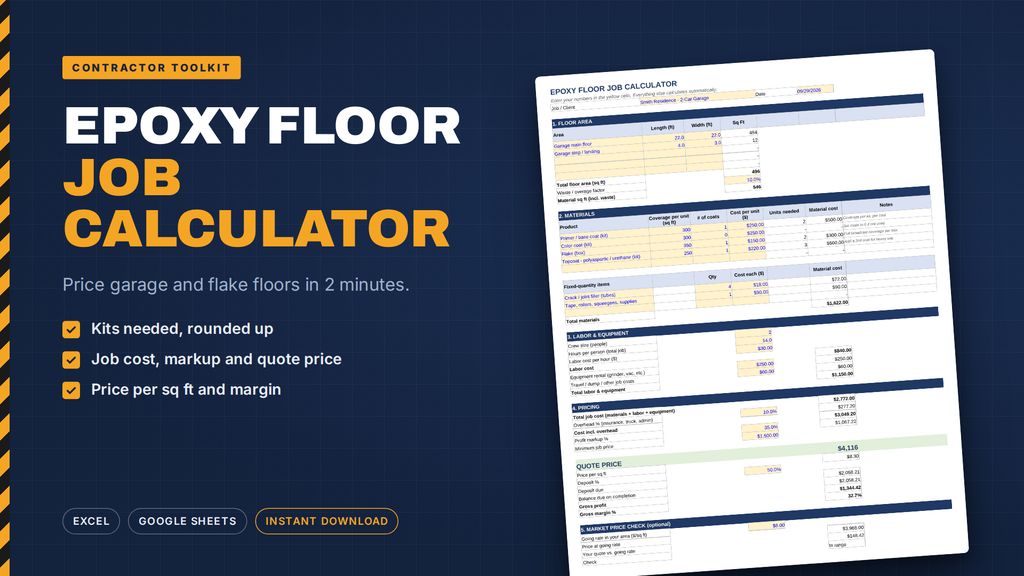
Price your next epoxy job free
Enter the floor size, your supplier's coverage and prices, and your labor. You'll get a quote price and price per sq ft, plus a check against the going rate in your area.
Open the free calculatorWhat a typical garage job looks like
Every system is different, so follow your product's data sheet. Here's the general flow for a residential flake floor:
- Walkthrough and quote. Measure the floor, look for cracks, old coatings, oil stains and signs of moisture, and ask how the customer uses the garage. Run a plastic sheet test if you have doubts about the slab.
- Prep day. Move everything out, tape the walls, then diamond grind the whole floor, edges included. Vacuum thoroughly. Fill cracks, pits and control joints as needed, then grind the repairs flush.
- Base coat. Mix exactly by ratio, in batches you can spread before the pot life runs out. Pour, squeegee, back roll, and keep a wet edge.
- Flake broadcast. Throw flakes into the wet base coat to full rejection (until the floor won't take any more) or to the coverage the customer picked.
- Scrape and vacuum. Once the base is ready, scrape off loose and standing flakes and vacuum again. Skipping this leaves a rough, uneven top coat.
- Top coat. Roll on the clear top coat. This is where UV resistance, gloss and slip resistance come from.
- Cure and walkthrough. Explain cure times in writing: when they can walk on it, and when they can park on it. Then take your photos and ask for the review.
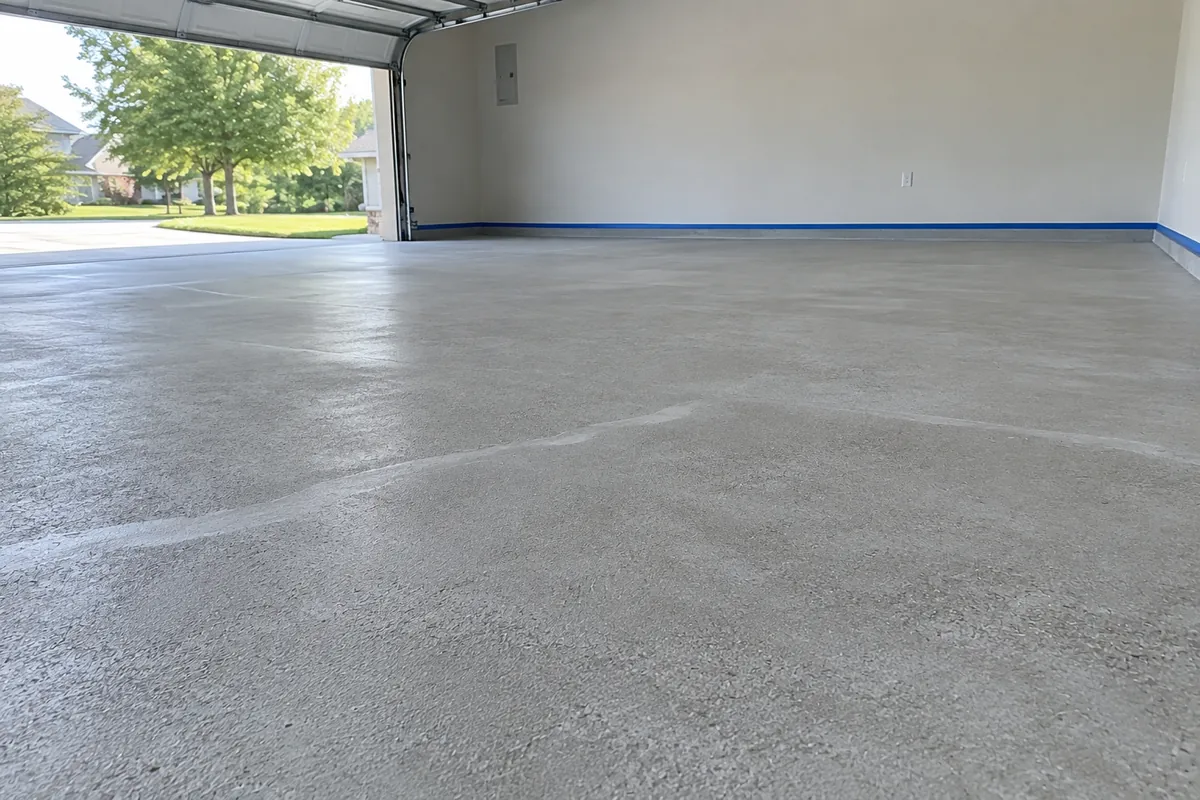
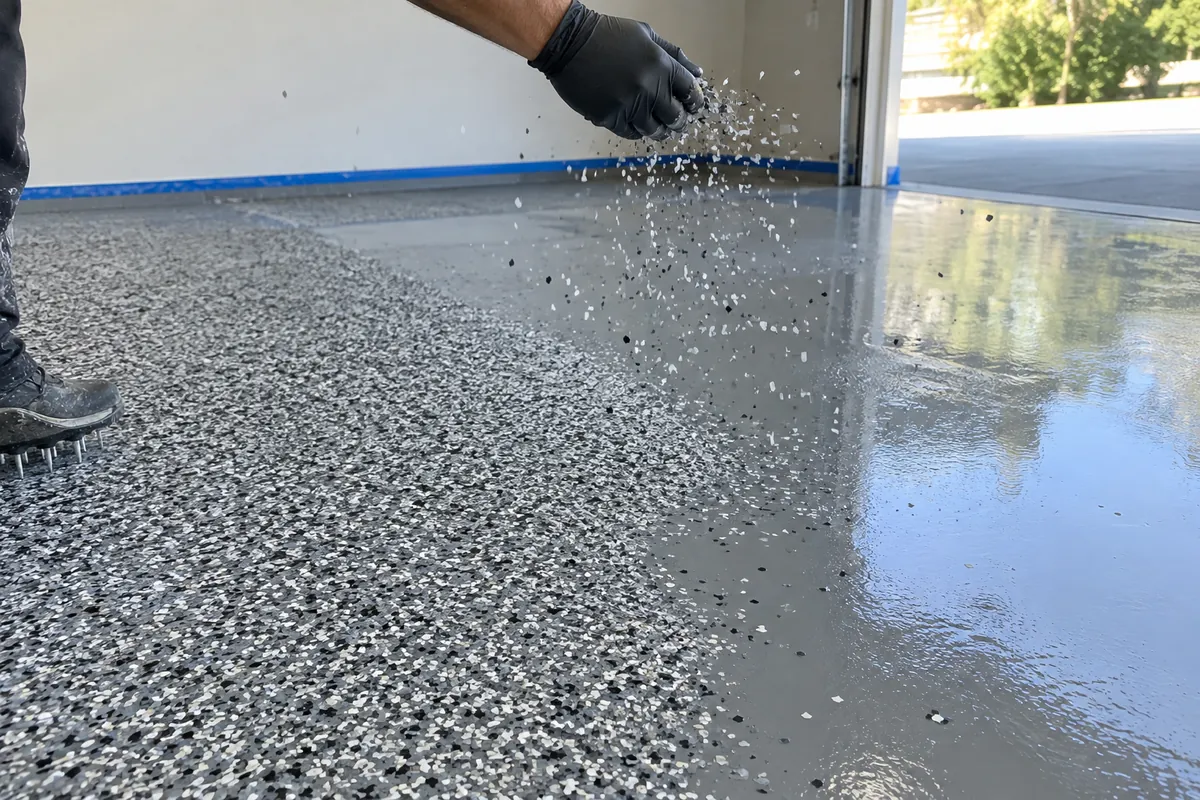
Fast-cure systems can do all of this in one day. Traditional epoxy systems often take two or three days with cure time between coats.
Upsells that raise every ticket
Most of these take little extra time once you're already set up:
- Stem walls and steps. Coating the short walls and the step into the house makes the job look finished. Price them by the linear foot or as a flat add-on.
- Moisture mitigation. If a slab tests wet, a moisture-mitigating primer is an add-on, not something you eat.
- Crack and spall repair. Heavy repair work should be its own line item, not buried in your price per sq ft.
- Anti-slip additive. Recommend it for anyone with kids, older family members, or a wet climate.
- Upgraded top coat. Offer a better-and-best option, for example epoxy top coat vs. polyaspartic.
- Patios, porches and pool decks. In Florida, outdoor coatings are a big market. Use products rated for UV and outdoor use.
Getting your first customers
- Google Business Profile. It's free, and it's where most local customers find you. Add photos from every job.
- Before and after photos and short videos. Epoxy is made for Instagram, TikTok and Facebook. Film the grind, the flake broadcast and the final reveal.
- Ask every customer for a review at the final walkthrough, when they're happiest. The Google Review Kit has printable QR cards and scripts.
- Local groups. Nextdoor and neighborhood Facebook groups work well for garages. One good job on a street often leads to the next one.
- Partner with realtors, builders and remodelers. They need a reliable floor sub.
- Follow up on every estimate. Most jobs are lost to silence, not price. The Client Scripts pack has word-for-word follow-up texts.
Mistakes that sink new epoxy businesses
- Skimping on prep. Acid etching often isn't enough. Grind the slab so the coating has something to grab.
- Skipping the moisture test. Moisture coming up through the slab can make the coating bubble and lift.
- Ignoring the conditions. Temperature, humidity and dew point all matter. Read the data sheet.
- Letting customers drive on it too soon. Hot tire pickup can pull up a coating that isn't fully cured.
- Underpricing to win jobs. You'll be busy and broke. Price from your numbers.
- No contract or deposit. Protect yourself before you load the truck.
When to hire help
Epoxy is hard to do alone. Grinding, mixing and spreading go faster and better with two people, and some steps have to happen fast once the material is mixed. Most people start with a helper on job days, paid hourly, before hiring full time.
- Know your labor cost per hour, including payroll taxes and workers' comp, not just the hourly wage.
- Using subs? Get their insurance certificate and workers' comp proof before day one. In Florida, an uninsured sub's injury claim can come back to the contractor.
- Track every lead and job so follow-ups don't slip as you get busy. Our Job Tracker turns follow-ups red when they're due.
Your first 30 days
- Form your LLC, get your EIN and open a business bank account
- Get your local business tax receipt and general liability insurance
- Take a training class or shadow an installer
- Coat your own garage and photograph every step
- Pick one or two systems and one supplier
- Set up your Google Business Profile with your photos
- Build your price from your real costs, with the free calculator
- Get a contract and deposit terms ready before your first quote
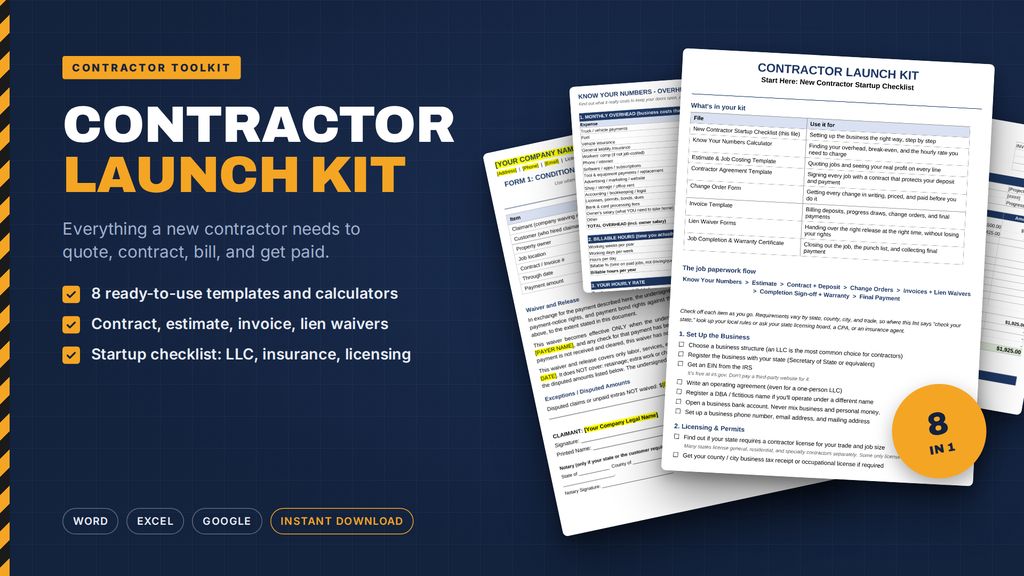
Get the whole setup in one download
The Contractor Launch Kit has a startup checklist, pricing calculator, contract, estimate, change orders, invoices and lien waivers, plus the full Epoxy Floor Job Calculator.
Get the Launch Kit ($89)Frequently asked questions
How much does it cost to start an epoxy flooring business?
Most estimates land between about $7,000 and $25,000. The biggest swing is equipment: you can rent a grinder and dust extractor for your first jobs, or buy your own setup. A truck or trailer you already own keeps you near the low end.
How much do epoxy contractors charge per square foot?
Professional residential garage floors commonly run about $5 to $9 per square foot, and commercial work often runs higher. Your price should come from your own costs, not the going rate alone. Material, labor, overhead and profit all have to be in it.
Do you need a license to install epoxy floors in Florida?
Florida does not license flooring at the state level, and Florida law bars cities and counties from requiring a local license for flooring work (F.S. 489.117(4)(a)). You still need a local business tax receipt, insurance, and permits where a job requires them. Other states have their own rules, so check yours.
How long does an epoxy garage floor take to install?
Many residential garages take one to three days depending on the system. A polyaspartic or fast-cure system can often be done in a day. A full epoxy system with longer cure times between coats usually takes longer. Always follow the product data sheet.
Is epoxy flooring a good side business?
It can be. Garage jobs are short, the work is visual so photos sell it, and you can start on weekends. The catch is that prep and moisture problems cause most failures, so learn the process before you sell your first job.
This guide is general information from a working contractor, not legal, tax or insurance advice. Costs and prices vary by area. Always follow your product's data sheet and confirm requirements with your state and local officials.